
Gardens, Walls & Fencing Services
Warwickshire, UK
~ ARTICLES & ADVICE ~
Closeboard/Featherboard versus Panels?
When choosing a fence type for your garden several considerations are needed:
Cost, Looks and Aesthetics, Security and Life of Fence
Overall Strength, Positioning, After Care & Maintenance
Example of a Typical 6 foot (1.8 metre) High Fence

Specifications for a CloseBoard / Featherboard Fence:
Closeboard and featherboard are the same thing, handy to know if you want to research this on the internet.
8 foot V notch posts are set 2 foot into the ground and encased in concrete, normally posts are set 10 foot (3 metres) apart; the posts are 5” x 3” in dimension. Fitted to each bay (a bay is the term for: The space between one post and the next post) are 3 supporting Arris rails and at the base a 6” Gravel board, the fence is completed by a row of overlapping feather boards.
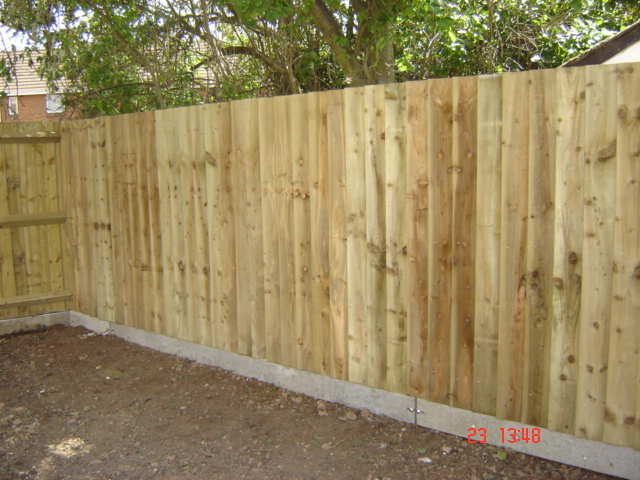
Featherboard Fence
With Gravel Kickboards, good in especially damp areas.
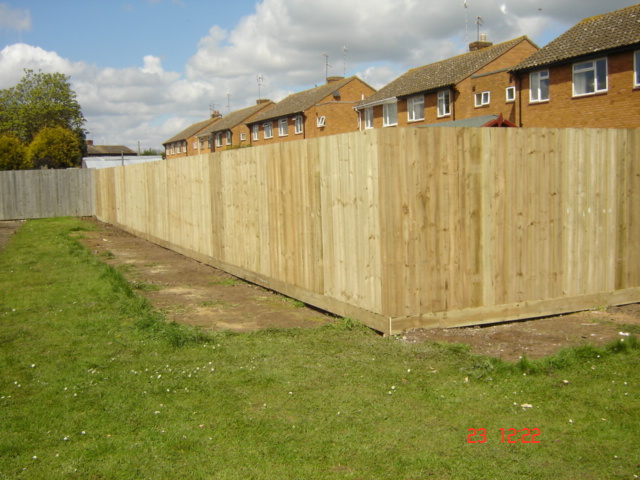
Featherboard/Closeboard Fence
Standard Feather board Fence.
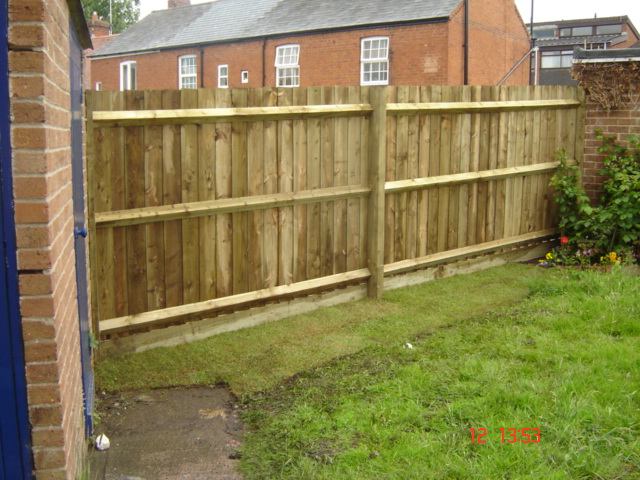
Arris Rails and Posts
These build the frame work and the support for the Featherboards or Closeboards.
Specifications for a Panelled Fence:
8 foot posts are set 2 foot into the ground and encased in concrete, normally posts are set 6 foot (1.8 meters) apart; the posts are 3” x 3” in dimension.
6 x6 foot (1.8 x 1.8 metres) Panels are fitted between posts.
Pros and Cons:
Cost:
Costs are similar, however there is a mis-conception that buying panels from your local DIY store and erecting them yourself is highly cost effective.
Panels from these stores are often of a sub-standard quality and grossly over priced for what they are, not to mention fitting panels yourself often ends in disaster. I’ve lost count of the DIY fence jobs i’ve had to come and sort out, usually resulting in having to buy new panels and all the other costs involved. Suddenly the cheap DIY job has become costly!
Materials are more costly for Closeboard, however fewer posts, less aggregate and far less digging of post holes tends to balance the cost on a fence run and they have a far longer life span.
Looks and Aesthetics:
This is purely down to individualistic taste, consideration should be given to the contours of your land as often a gradient will look more pleasing in Closeboard rather than large staggers of panels.
Security:
Closeboard is favoured by Council Authorities and businesses due to a higher provision of security over panelled fences and will give a higher level of security for your property.
Life of Fence:
There are many qualities of panels, the cheap panels will only last around 7 years, and only IF you look after them, high quality panels may last 15 years or more; on average panels will require replacing every 10 to 12 years.
Closeboard fences are of a better quality with a usual life span of 25 to 30 years; if treated, longer if you look after them.
Overall Strength:
Again some panels are far stronger than others, this will carry a price premium, but on the whole they tend not to fair well in strong winds. Closeboard is very strong in construction and will be more resistant to impact damage, high winds and general abuse.
Positioning:
Closeboard fencing is FAR more versatile than panels. You can follow gradients and contours, stagger round obstacles, set out posts to miss trees etc.
After Care & Maintenance:
Generally all fencing and fencing materials are pre-treated, so preservation of wood is not normally required after construction. However if a panel is damaged you will need a new panel to replace it and as panel styles often change, a perfect match is not always available!
With Closeboard, specifications in size and style do not generally change and if a Closeboard fence is damaged, normally this is a quick fix by replacing one or two strips of board.
To Close……….
Panels can be highly decorative especially to the fronts of properties and if fitted correctly may last approx 7 years, they can be fitted with concrete posts and gravel boards for ease of change at a later date, however this will increase the initial costs.
Close board is a strong and reliable form of fencing which will last a long time and if any repairs are ever needed, the costs are lower than with panels.
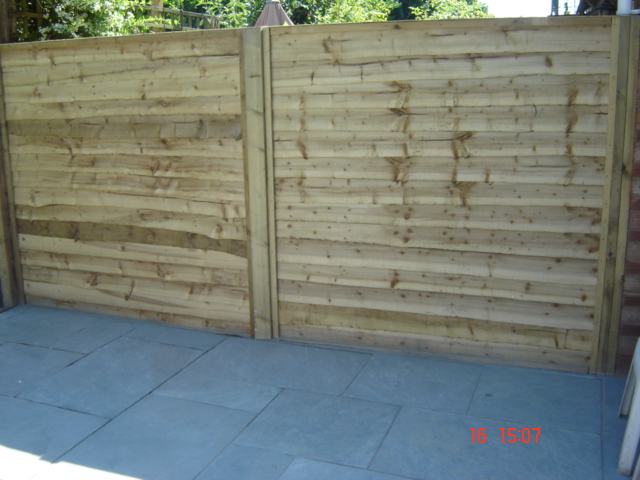
Fence Panel with Vertical boards
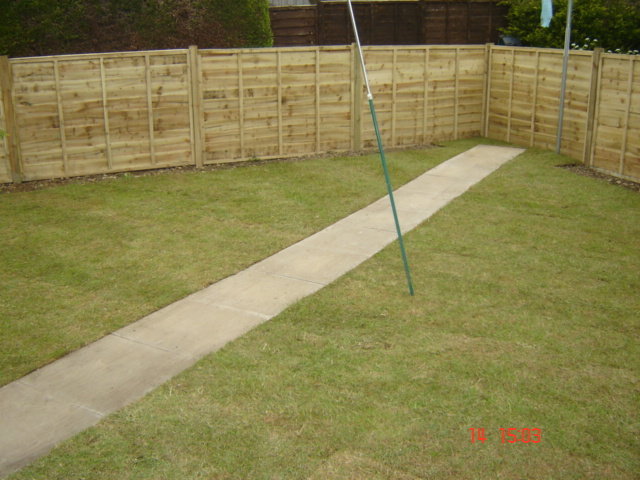
Standard 4 foot Fence Panels
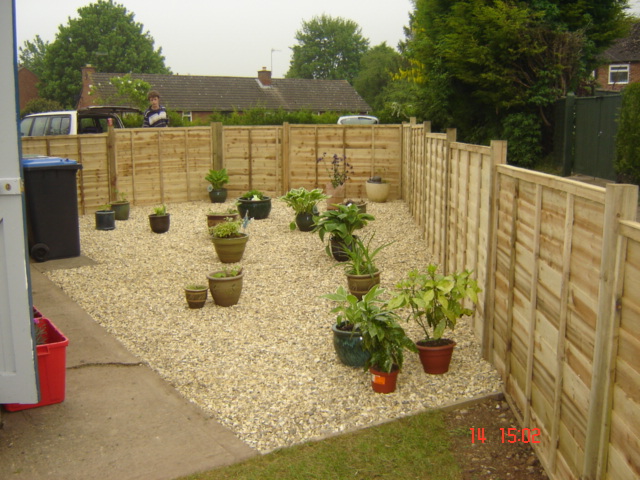
Standard Wooden Fence Panels but staggered due to the contours of the garden. This would look better with Closeboard/Featherboard Fencing.
We hope this information may have been of some help as a guideline and would be pleased to help further if we can.






 GWF Services